Introduction
簡介
Imagine working as a network engineer for a large retail corporation. Maintaining reliable internet connectivity is critical for the company’s operations, such as processing sales transactions and managing inventory. You need to ensure that the company's point-of-sale (POS) systems at various retail locations have reliable internet access via public IP addresses to maintain consistent transaction processing. Simultaneously, you need to manage the dynamic assignment of private IP addresses to support a rapidly growing workforce and an increasing number of mobile devices used by store employees for inventory management and customer service.
假設你是一家大型零售公司的網路工程師。維持穩定的網際網路連線對公司營運至關重要,例如處理銷售交易與管理庫存。你需要確保公司在各零售據點的銷售點(POS)系統能透過公用 IP 位址獲得穩定的網際網路連線,以維持交易處理的一致性。同時,你也需要管理私有 IP 位址的動態指派,以支援快速成長的員工人數,以及門市員工用於庫存管理與客戶服務的行動裝置數量增加。
You realize that:
你了解到:
- Proper planning for internet connectivity is essential for seamless business operations and customer access.妥善規劃網際網路連線,對於順暢的業務營運與顧客存取至關重要。
- Understanding how IP addresses are assigned and managed is crucial for network stability and scalability.了解 IP 位址如何被指派與管理,對於網路的穩定性與可擴充性至關重要。
- The limited IPv4 address space requires efficient use of private and public IP addresses to ensure all devices can communicate with the internet.有限的 IPv4 位址空間需要有效運用私有與公用 IP 位址,以確保所有裝置都能與網際網路通訊。
 | How do you think you would configure internet access on a Cisco router to support POS systems and all network users? 你認為應該如何在 Cisco 路由器上設定網際網路存取,以支援 POS 系統與所有網路使用者? |
To address these concerns, network engineers need to understand the process of assigning IP addresses and implementing Network Address Translation (NAT) to enable communication between private and public networks. By understanding and implementing NAT as well as DHCP, network engineers can ensure reliable and efficient internet connectivity for both internal and external communications, supporting seamless retail operations and enhancing customer experience.
為解決這些問題,網路工程師需要了解指派 IP 位址的流程,並實作網路位址轉換(NAT),以便讓私有與公用網路之間能夠通訊。透過了解並實作 NAT 以及 DHCP,網路工程師可以確保內部與外部通訊都能獲得可靠且高效的網際網路連線,進而支援順暢的零售營運並提升顧客體驗。
In this course, you will learn:
在本課程中,你將學習:
- How DHCP can be used by ISPs for address assignment and what configurations are needed on the customer side.ISP 如何運用 DHCP 進行位址指派,以及客戶端需要做哪些設定。
- When to use NAT and Port Address Translation (PAT) for efficient address management.何時該使用 NAT 與連接埠位址轉換(PAT)來有效管理位址。
- How to configure static and dynamic NAT to ensure proper routing of network traffic.如何設定靜態與動態 NAT,以確保網路流量正確路由。
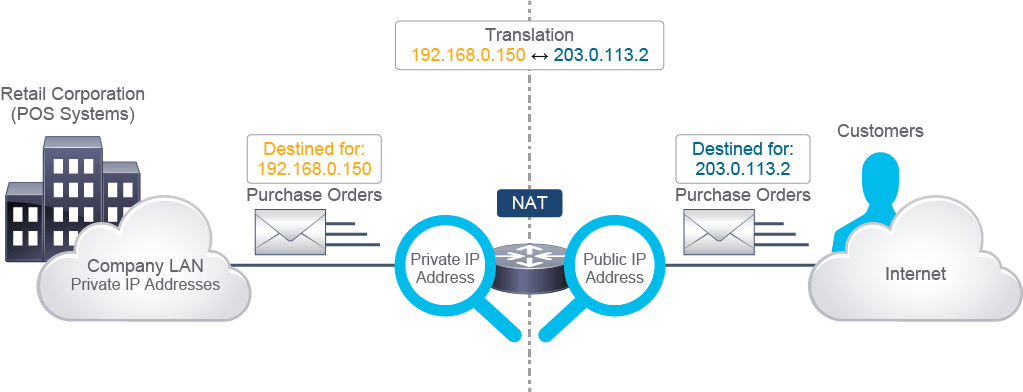
NAT provides a solution by enabling multiple devices with private IP addresses to access the internet through a limited pool of public IP addresses.
NAT 提供了一種解決方案,讓多台使用私有 IP 位址的裝置能透過有限的公用 IP 位址集區存取網際網路。