Introduction
簡介
You are a new junior network engineer at a small but rapidly growing company. Right out of the gate, you diagnose a significant issue with the network configuration—it is entirely laid out on a flat IPv4 subnet architecture. This single-subnet design is not just suboptimal; it poses several technical challenges. All devices are directly communicating on the same broadcast domain, creating a non-segmented network landscape. This situation not only increases security vulnerabilities due to unrestricted inter-device communication but also amplifies broadcast traffic, significantly throttling network performance during peak operational hours. Now, it is up to you to rearchitect this open-plan IPv4 network into a streamlined, segmented infrastructure!
你是一家小型但正快速成長公司的新任初階網路工程師。一開始你就發現網路設定有個重大問題——整個網路採用扁平的 IPv4 子網路架構。這種單一子網路設計不僅不夠理想,還帶來多項技術上的挑戰。所有裝置都在同一個廣播網域中直接通訊,形成未經區隔的網路環境。這種狀況不僅因裝置間不受限制的通訊而增加安全弱點,還會放大廣播流量,在尖峰作業時段大幅拖累網路效能。現在,你的任務就是把這個開放式的 IPv4 網路重新規劃成精簡、經過區隔的基礎架構!
You quickly realize that:
你很快就發現:
- The single subnet design is inadequate for the company's needs, leading to inefficient IP address usage and network congestion.單一子網路的設計無法滿足公司的需求,導致 IP 位址使用效率低落並造成網路壅塞。
- The lack of network segmentation not only affects performance but also poses security risks, as all devices are exposed within the same broadcast domain.缺乏網路區隔不僅影響效能,也帶來安全風險,因為所有裝置都暴露在同一個廣播網域中。
- The current network architecture cannot scale efficiently without substantial changes and it stifles the company's growth potential.目前的網路架構若不做大幅變動便無法有效擴充,這也抑制了公司的成長潛力。
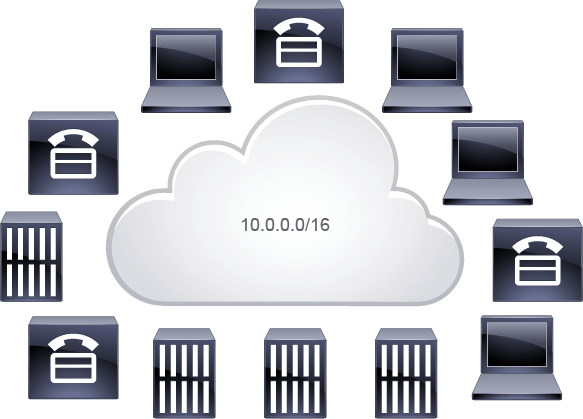
The company's network design is causing issues. All devices in the network are connected to one large IPv4 subnet, 10.0.0.0/16.
這家公司的網路設計正在造成問題。網路中所有裝置都連接到同一個大型 IPv4 子網路 10.0.0.0/16。
Understanding subnetting is essential for any network engineer. Properly subnetting a network ensures that it can scale to meet growing demands while maintaining security and efficient resource use. This knowledge allows you to segment a network logically, enhancing overall performance and making it easier to manage and protect.
了解子網路劃分對任何網路工程師都是必備知識。適當地將網路劃分子網路,可確保網路能隨需求成長而擴充,同時維持安全性與資源使用效率。這項知識讓你能以邏輯方式區隔網路,提升整體效能,並更容易管理與保護網路。
In this course, you will learn how to:
在本課程中,你將學會:
- Describe IPv4, including IPv4 addressing and its general characteristics.描述 IPv4,包括 IPv4 定址及其一般特性。
- Explain the IPv4 address representation, its structure (network and the host portion of addresses), and the IPv4 address fields說明 IPv4 位址的表示法、結構(位址中的網路部分與主機部分),以及 IPv4 位址欄位。
- Distinguish between address classes and the types of reserved IPv4 addresses, with focus on relevant types (network and broadcast address).區分位址類別與保留 IPv4 位址的類型,並著重於相關類型(網路位址與廣播位址)。
- Demonstrate your knowledge of IPv4 subnetting and variable-length subnet mask (VLSM).展現你對 IPv4 子網路劃分與可變長度子網路遮罩(VLSM)的知識。
- Verify IPv4 settings on end-host devices.驗證終端主機裝置上的 IPv4 設定。
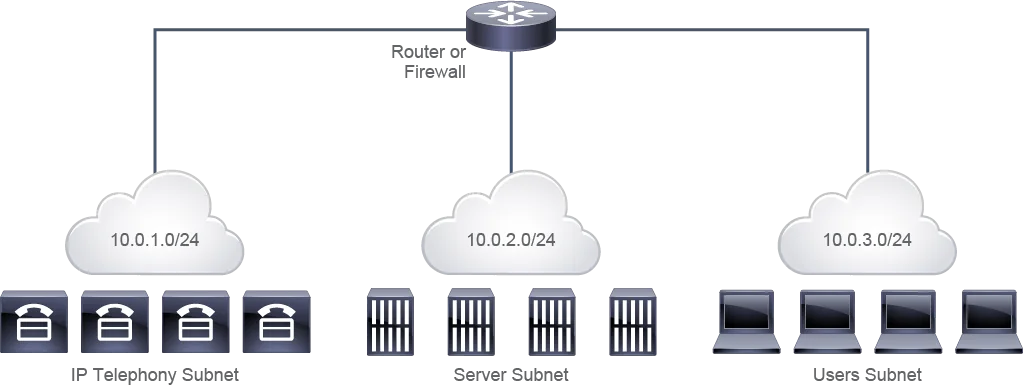
By correctly subnetting the company's network, we achieve better security, scalability, and take care of congestion issues.
藉由正確地為公司網路劃分子網路,我們達成更佳的安全性、可擴充性,並解決壅塞問題。