Communication can be described as successful sharing or exchanging of information. It involves a source and a destination of the information. Information is represented in some form of message. In computer networks, the sources of messages are end devices, also called endpoints or hosts. The messages are created at the source, transferred over the network, and delivered to the destination. For communication to be successful, the message has to traverse one or more networks. A network interconnects a large number of devices produced by different hardware and software manufacturers over many different transmission media, each one having its specifics. All these parameters make the network very complex.
通訊可以描述為成功地分享或交換資訊。它涉及資訊的來源端與目的端。資訊以某種形式的訊息來表示。在電腦網路中,訊息的來源是終端裝置,也稱為端點或主機。訊息在來源端建立,經由網路傳送,再遞交到目的端。要讓通訊成功,訊息必須穿越一個或多個網路。網路將大量由不同硬體與軟體製造商所生產的裝置,透過許多不同的傳輸媒介互連起來,而每種媒介都有其特性。這些參數使得網路變得非常複雜。
Communication models were created to organize internetworking complexity. Two commonly used models today are ISO OSI and TCP/IP. Both provide a model of networking that describes internetworking functions and a set of rules called protocols that set out requirements for internetworking functions.
通訊模型的建立是為了整理網路互連的複雜性。現今常用的兩種模型是 ISO OSI 與 TCP/IP。兩者都提供了一種網路模型,用來描述網路互連的功能,並提供一組稱為通訊協定的規則,明定網路互連功能的需求。

Both models present a network in terms of layers. Layers group networking tasks by the functions that they perform in implementing a network. Each layer has a particular role. In performing its functions, a layer deals with the layer above it and the layer below it, which is called "vertical" communication. A layer at the source creates data that is intended for the same layer on the destination device. This communication of two corresponding layers is also termed "horizontal."
兩種模型都以「層」的方式呈現網路。層依據在實作網路時所執行的功能,將網路工作分組。每一層都有特定的角色。某一層在執行其功能時,會與其上層及下層互動,這稱為「垂直」通訊。來源端的某一層所建立的資料,是要給目的端裝置上的同一層使用。這種兩個對應層之間的通訊也稱為「水平」通訊。
The second aspect of communication models is protocols. In the same way that communication functions are grouped in layers, so are the protocols. People usually talk about the protocols of certain layers, protocol architectures, or protocol suites. In fact, TCP/IP is a protocol suite.
通訊模型的第二個面向是通訊協定。就如同通訊功能依層分組,通訊協定也是如此。人們通常會談到某一層的協定、協定架構或協定套組。事實上,TCP/IP 就是一個協定套組。
A networking protocol is a set of rules that describe one type of communication. All devices participating in internetworking agree with these rules, and this agreement makes communication successful. Protocols define the rules that are used to implement communication functions.
網路通訊協定是一組描述某一類型通訊的規則。所有參與網路互連的裝置都同意遵守這些規則,這樣的共識使通訊得以成功。通訊協定定義了用來實作通訊功能的規則。
While both ISO OSI and TCP/IP models define protocols, the protocols that are included in TCP/IP are widely implemented in networking today. Nonetheless, as a general model, ISO OSI aims at providing guidance for any type of computer system, and it is used in comparing and contrasting different systems. Therefore, ISO OSI is called the reference model.
雖然 ISO OSI 與 TCP/IP 模型都定義了通訊協定,但現今網路中廣泛實作的是 TCP/IP 所包含的協定。不過,ISO OSI 作為一種通用模型,旨在為任何類型的電腦系統提供指引,並用於比較與對照不同的系統。因此,ISO OSI 被稱為參考模型。
Standards-based, layered models provide several benefits:
以標準為基礎的分層模型具有多項優點:
- Make complexity manageable by breaking communication tasks into smaller, simpler functional groups.將通訊工作拆解成更小、更簡單的功能群組,使複雜度變得可管理。
- Define and specify communication tasks to provide the same basis for everyone to develop their own solutions.定義並明確規範通訊工作,讓所有人都能在相同基礎上發展自己的解決方案。
- Facilitate modular engineering, allowing different types of network hardware and software to communicate with one another.促進模組化工程,讓不同類型的網路硬體與軟體能夠彼此通訊。
- Prevent changes in one layer from affecting the other layers.避免某一層的變更影響其他層。
- Accelerate evolution, providing for effective updates and improvements to individual components without affecting other components or having to rewrite the entire protocol.加速演進,讓個別元件能有效更新與改良,而不影響其他元件,也不必重寫整個協定。
- Simplify teaching and learning.簡化教學與學習。
Computer networks were initially concerned only with the transfer of data. The term data referred to information in an electronic form that could be stored and processed by a computer. Additionally, different data transfer protocols required completely different network topologies, equipment, and interconnections. IP, AppleTalk, Token Ring, and FDDI are examples of data transfer communications protocols that required different hardware, topologies, and equipment to operate properly. In addition to data transfer, other communication networks existed in parallel. For example, telephone networks were built using separate equipment and implemented different protocols and standards. Over the years, computer networking evolved such that IP became a common data communications standard. The technology has also been extended to include other types of communication, such as voice conversations and video. Since only computer networking protocols and standards are now used for voice, video, and "pure" computer data, the networking was termed converged networking.
電腦網路最初只關注資料的傳輸。「資料」一詞指的是能以電子形式儲存並由電腦處理的資訊。此外,不同的資料傳輸協定需要完全不同的網路拓樸、設備與互連方式。IP、AppleTalk、Token Ring 與 FDDI 都是資料傳輸通訊協定的例子,它們需要不同的硬體、拓樸與設備才能正常運作。除了資料傳輸之外,還有其他通訊網路同時並存。例如,電話網路是以獨立的設備建置,並實作不同的協定與標準。多年下來,電腦網路逐漸演進,IP 成為通用的資料通訊標準。這項技術也擴展到其他類型的通訊,例如語音通話與視訊。由於語音、視訊與「純」電腦資料現在都只使用電腦網路的協定與標準,這種網路便稱為整合式網路(converged networking)。
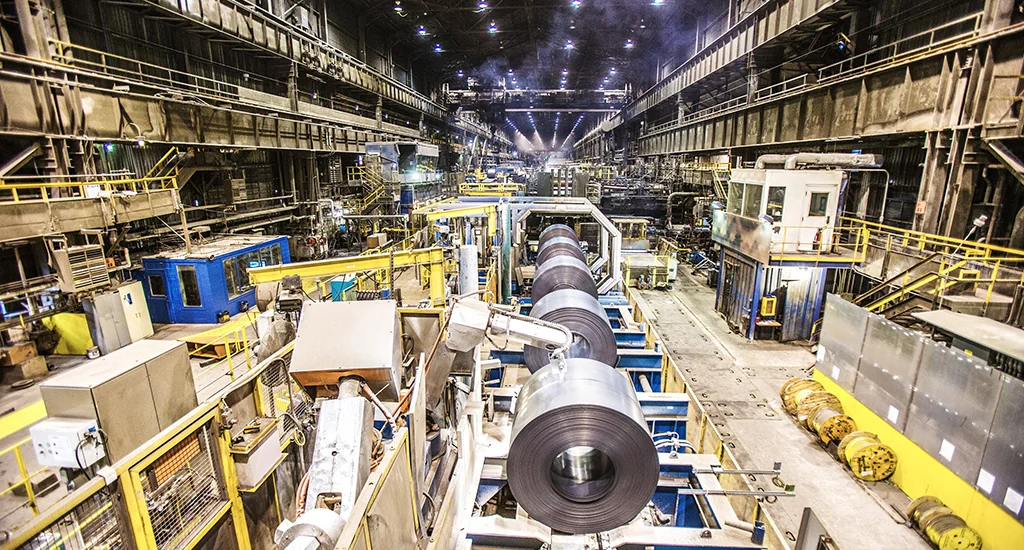
The need to interconnect devices is not exclusive to computer networks. Industrial manufacturing companies used standards and protocols specifically designed to provide automation and control over the production process. The management and monitoring of the manufacturing plant were traditionally the task of the Operational Technology (OT) departments. IT departments, which manage business applications, and OT departments functioned independently. Today, thanks to the industrial Internet of Things (IoT), manufacturers are collecting more data from the plant floor than ever before. However, that data is only as valuable as the decisions it can support. OT and IT departments collaborate to make the data meaningful and accessible for use across the organization.
互連裝置的需求並非電腦網路所獨有。工業製造公司使用專為生產流程自動化與控制而設計的標準與協定。製造工廠的管理與監控傳統上是營運技術(OT)部門的職責。負責管理商業應用程式的 IT 部門與 OT 部門各自獨立運作。如今,藉助工業物聯網(IoT),製造商從工廠現場收集的資料比以往任何時候都多。然而,這些資料的價值取決於它能支援哪些決策。OT 與 IT 部門協同合作,讓資料變得有意義,並可供整個組織取用。
The result is another example of a converged network, called Factory Network, which connects factory automation and control systems with IT systems using standards-based networking. The Factory Network provides real-time access to mission-critical data at the plant level while sharing knowledge throughout the enterprise, helping operations leaders make decisions that can contribute to safety and operational effectiveness.
其結果是另一種整合式網路的例子,稱為工廠網路(Factory Network)。它以標準化網路技術,將工廠自動化與控制系統和 IT 系統連接起來。工廠網路提供對工廠層級關鍵任務資料的即時存取,同時在整個企業內分享知識,協助營運主管做出有助於安全與營運效能的決策。